How to Serve a Defendant

Serving a defendant is the legal term for officially handing them the lawsuit papers. It sounds dramatic, but in reality, it's just a bureaucratic hurdle. However, it is the most critical step in your small claims case. If you don't do it right, your case will be dismissed, and you'll have to start over.
There are many ways to serve someone—asking a friend, hiring the Sheriff, or paying a professional. But if you want to sleep at night and ensure your case moves forward without a hitch, there is really only one foolproof way.
Step 1: Identify the Correct Defendant
Before you serve anyone, you must ensure you are suing the right person.The most common mistake tenants make is suing their Property Management Company.
Unless your dispute is directly about the conduct of the management company itself (which is rare), you should be suing the Property Owner. The owner is the one holding your deposit and legally responsible for the lease.
Property managers are often just agents. If you sue them, they may show up to court and say, "I don't own the building," and the judge might dismiss your case against them. To be safe, you want the actual owner on the hook.
Get the Deed
How do you find the official owner? You get a copy of the Grant Deed from the County Registrar. This is the ultimate source of truth. You can request a copy online through the LA County Registrar-Recorder.
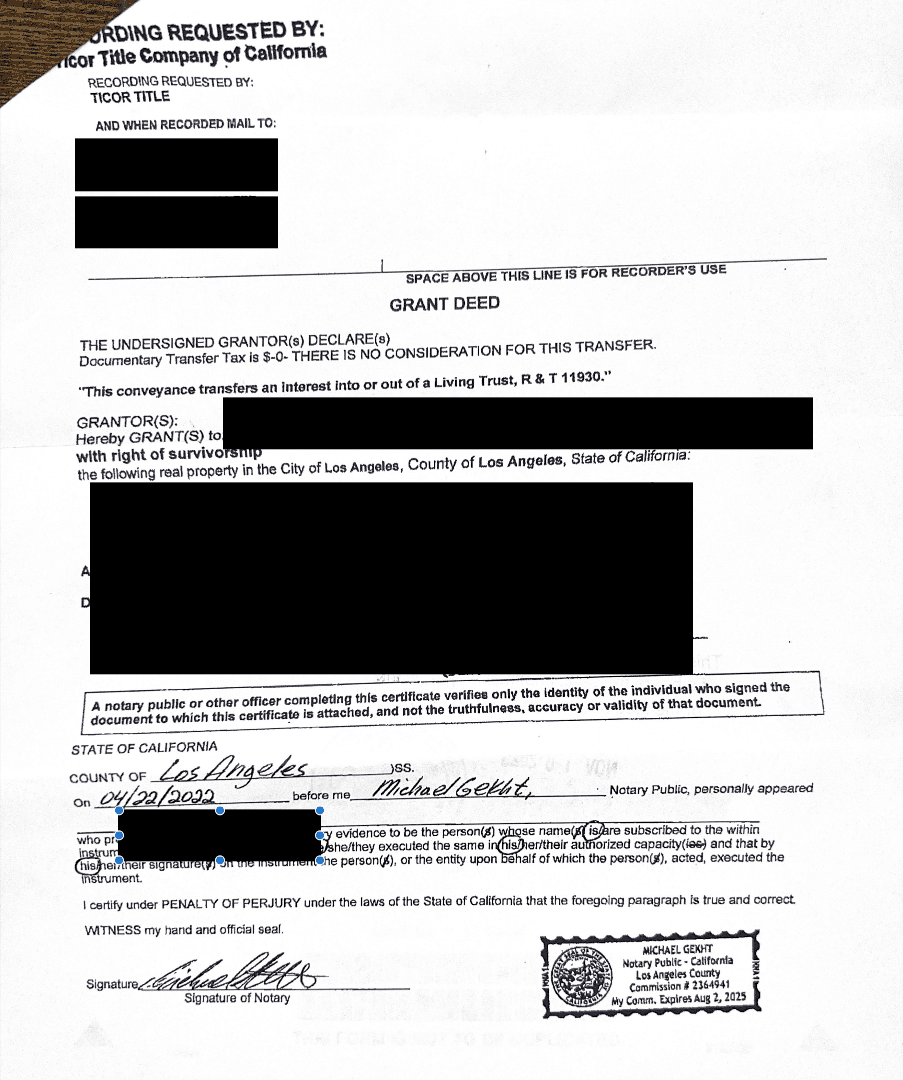
Exhibit A: The Grant Deed
Cost: Approx. $7.50
Time: ~12 days on average (the county recorder promises at most 20 working days).
Step 2: Find the Registered Agent
If the owner on the deed is an LLC or Corporation (e.g., "Main Street Apartments, LLC"), you cannot just hand papers to the building manager. You must serve their Agent for Service of Process.
You can confirm the current registered agent by searching the business entity name on the California Secretary of State's website:bizfileonline.sos.ca.gov.
Check Your Lease
California law (Civil Code § 1962) requires landlords to disclose the name and specific address of the owner or an authorized agent for service of process in the lease agreement.
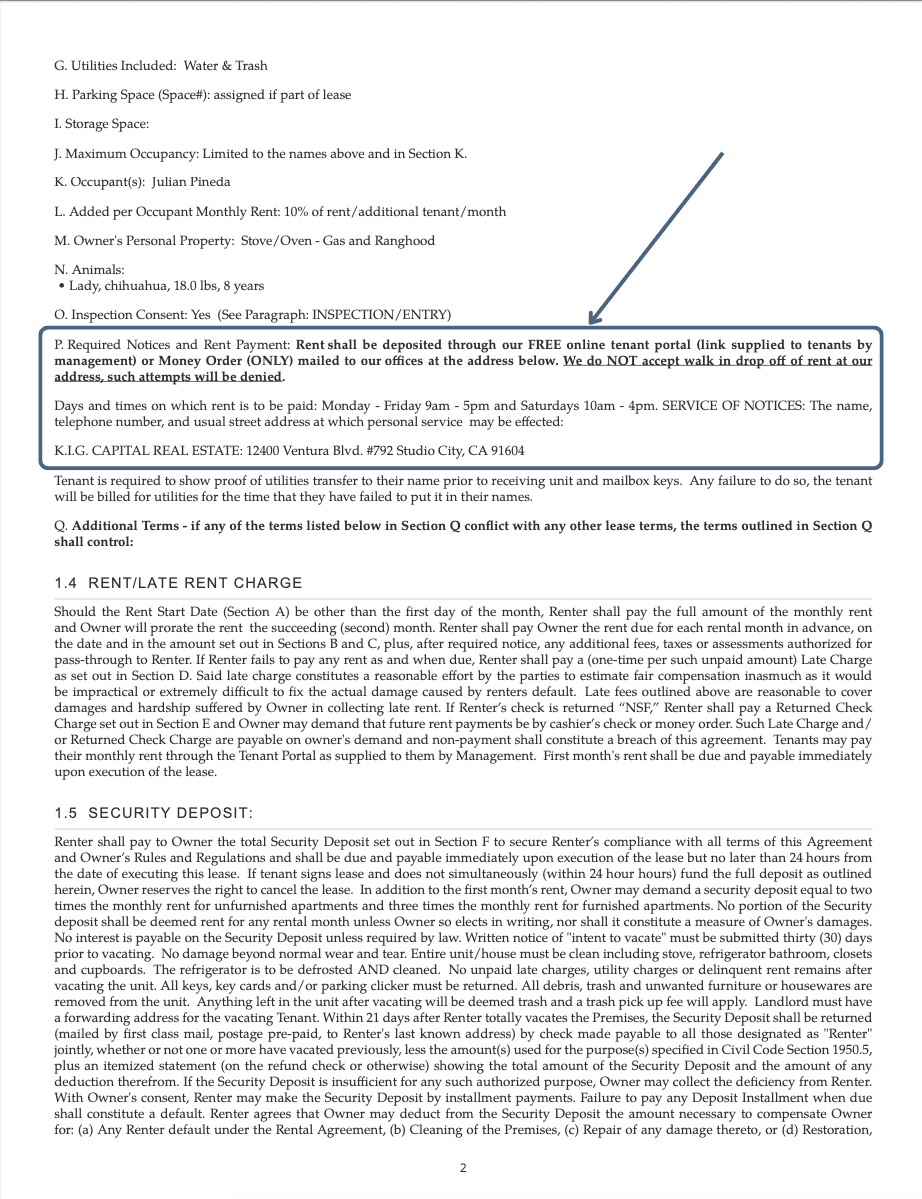
Exhibit B: Lease Disclosure (CC § 1962)
Step 3: The Foolproof Way to Serve
Once you have your papers filed and your target identified, how do you serve them? You have options like asking a friend (risky) or hiring the Sheriff (cheap, but slow and bureaucratic).
Hire a Professional Process Server.Specifically, use an online "E-File & Serve" provider.
For a fee (usually $75-$150), they will send a professional to hand-deliver the documents. More importantly, they will handle the Proof of Service for you.
The provider will fill out the "Proof of Service" form (SC-104), file it with the court, and email you a confirmation. This eliminates the risk of filling out the form incorrectly or forgetting to file it on time.
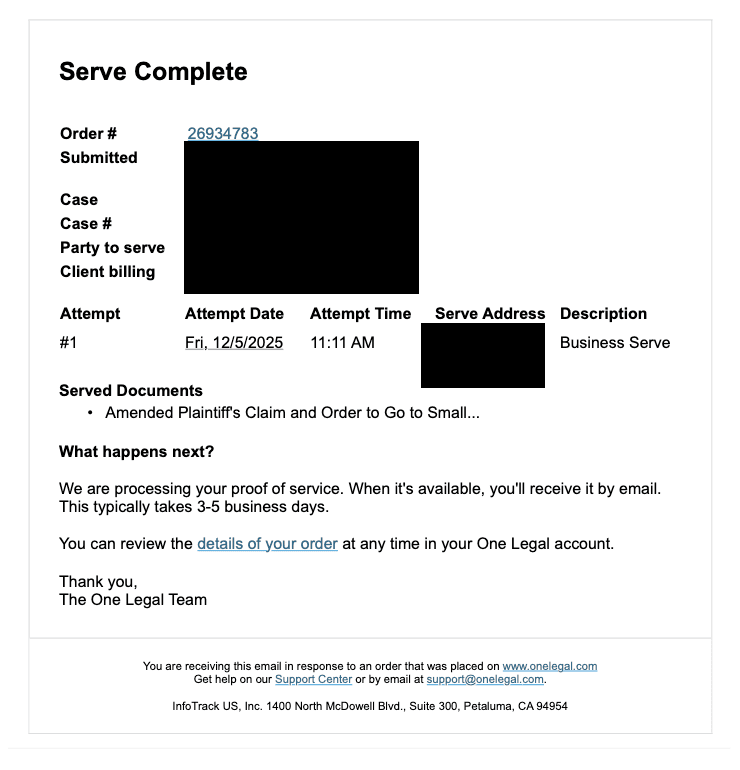
Exhibit C: Peace of Mind
When you receive that email confirmation, you are done. No mailing forms, no driving to the courthouse. It is money well spent for the certainty that your case is active.